
Descripción
- No. of pages: 848
- Language: English
- Edition: 3
- Published: October 17, 2017
- Imprint: Elsevier
- Hardback ISBN: 9781455704118
Description
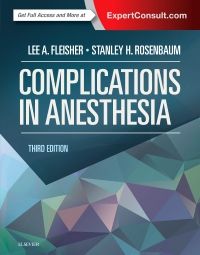
Using a unique, problem-solving approach, Complications in Anesthesia, 3rd Edition, walks you through effective solutions to common complications in anesthesia and critical care. This practical reference uses a highly structured, clearly illustrated format to bring you up to date with what’s new in the field, help you anticipate potential challenges, and guide you through life-saving solutions.
Key features
- Presents content in an updated, logical organization covering various types of complications (drugs, testing, intubation, line insertion, surgical procedures, etc.) followed by differential diagnosis and treatment of signs of complications (intraoperative, such as hypoxia or hypotension; and postoperative, such as MI).
- Follows a problem-based, practice-oriented approach throughout; case synopses are followed by concise coverage of recognition, risk assessment, implications, management, and prevention.
- Allows you to review the case reports, contemplate the implications, then check your response against what the experts have to say.
- Includes numerous photographs, diagrams, flow charts, and tables that illustrate key concepts.
- Ideal as a clinical reference and as a study tool when preparing for oral boards.
For Anesthesiologists, Nurse Anesthestists
Table of contents
Section 1: Preoperative Conditions
1 Adrenal Insufficiency
2 Alzheimer’s Disease
3 Chemical Dependency: Nonopioids
4 Chemical Dependency: Opioids
5 Chronic Opioid Use
6 Dialysis-Dependent Patients
7 Do-Not-Resuscitate Orders in the Operating Room
8 Drugs Affecting the Renin-Angiotensin System
9 HIV Infection and AIDS
10 Hypertensive Disorders of Pregnancy
11 Hyperthyroidism: Thyroid Storm
12 Hypothyroidism: Myxedema Coma
13 Mechanical Assist Devices
14 Myasthenic Disorders
15 Patient Confidentiality
16 Patients with Cardiac Rhythm Management Devices
17 Patients with Seizure Disorders
18 Perioperative Management of Patients with Muscular Dystrophy
19 Porphyrias
20 Preanesthetic Evaluation: False-Positive Tests
21 Preanesthetic Evaluation: Inadequate or Missing Test Result
22 Preoperative Cardiac Interventions
23 Sarcoidosis
24 Sepsis, Systemic Inflammatory Response Syndrome, and Multiple Organ Dysfunction Syndrome
25 Steroids
26 The Jehovah’s Witness Patient
27 Unstable Cervical Spine, Atlantoaxial Subluxation
28 Upper Respiratory Tract Infection
Section 2: Procedure-Related Complications
29 Abdominal Aortic Aneurysm Repair
30 Adenotonsillectomy
31 Anesthesia for Electroconvulsive Therapy
32 Anesthetic Complications of Fetal Surgery: EXIT Procedures
33 Antepartum Hemorrhage
34 Anterior Mediastinal Mass
35 Anticoagulants and Peripheral Nerve Block
36 Anticoagulation Initiation and Reversal for Cardiac Surgery
37 Arteriovenous Malformation: Normal Perfusion Pressure Breakthrough
38 Bleeding After Cardiac Surgery
39 Cardiomyopathies
40 Cardioversion
41 Carotid Endarterectomy
42 Chronic NSAID Use
43 Complications after Pneumonectomy
44 Complications of Adrenal Surgery
45 Complications of Carcinoid Tumors
46 Complications of Laparoscopic Surgery
47 Complications of Lithotripsy
48 Complications of Massive Transfusion
49 Complications of Radical Urologic Surgery
50 Complications of Spinal Surgery
51 Complications of Thyroid Surgery
52 Complications of Transurethral Surgery
53 Complications of Trauma Surgery
54 Continuous Nerve Blocks: Perineural Local Anesthetic Infusion
55 Extremity Tourniquets
56 Fetal Distress
57 Foreign Body Aspiration
58 Head Injury
59 Hemodilution and Blood Conservation
60 Intracranial Aneurysms: Rebleeding
61 Intracranial Aneurysms: Vasospasm and Other Issues
62 Laryngoscopy and Microlaryngoscopy
63 Major Organ System Dysfunction after Cardiopulmonary Bypass
64 Mediastinal Masses
65 Methylmethacrylate
66 One-Lung Ventilation
67 Open Globe Injury
68 Perioperative Psychological Trauma
69 Peripheral Vascular Surgery
70 Pituitary Tumors: Diabetes Insipidus
71 Posterior Fossa Surgery
72 Postpartum Hemorrhage
73 Preterm Labor
74 Pulmonary Hypertension
75 Retrobulbar Block
76 Sedation of Pediatric Patients
77 Spinal Cord Injury
78 Thermally Injured Patients
79 Thoracic Aortic Aneurysm
80 Toxic Ingestion
81 Troubleshooting Common Problems During Cardiopulmonary Bypass
Section 3: Intraoperative Agents and Potential Complications
82 Antibiotics
83 Antiemetic Drugs
84 Antihistamines: H1- and H2-Blockers
85 Autonomic Hyperreflexia
86 Barbiturates: Porphyrias
87 Disorders of Potassium Balance
88 Intrathecal Opioids
89 Ketamine
90 Magnesium
91 Magnetic Resonance Imaging
92 Muscle Relaxants
93 Nitrous Oxide: Neurotoxicity
94 Nonbarbiturate Anesthetics
95 Nondepolarizing Neuromuscular Block
96 Perioperative Fluid Management
97 Reversal Agents: Naloxone, Flumazenil, and Sugammadex
98 Succinylcholine
99 Volatile Anesthetics: Organ Toxicity
100 Blood and Blood Products: Infections
101 Blood and Blood Products: Transfuction Reaction
102 Epidural Anesthesia: Unintended Intrathecal Injection
103 Local Anesthetic Systemic Toxicity
104 Respiration Depression After Spinal Anesthesia
Section 4: Equipment-Related Complications
105 Anesthesia Circuit
106 Carbon Dioxide Absorbers
107 Central Venous Pressure Monitoring
108 Electrical Safety
109 Fires in the Operating Room
110 Flowmeters
111 Intracranial Pressure Monitoring
112 Intravenous Drug Delivery Systems
113 Laser Complications
114 Mechanical Ventilators
115 Patient Warming Systems
116 Pipeline Source Failure
117 Proportioning Systems
118 Pulmonary Artery Pressure Monitoring
119 Rapid Fluid and Blood Delivery Systems
120 Scavenging Systems
121 Surgical Diathermy and Electrocautery
122 Transesophageal Echocardiography
123 Vaporizers
Section 5: Perioperative Events
124 Adverse Neurologic Sequelae: Central Neurologic Impairment
125 Adverse Neurologic Sequelae: Peripheral Nerve Injury
126 Adverse Outcomes: Withheld Information or Misinformation
127 Air Emboli
128 Alleged Malpractice
129 Anaphylaxis and Anaphylactoid Reactions
130 Angioedema and Urticaria
131 Autonomic Dysreflexia
132 Awareness Under Anesthesia
133 Bradyarrythmias
134 Bronchospasm
135 Celiac Plexus Block: Side Effects and Complications
136 Corneal Injury
137 Delayed Emergence
138 Dental Injuries
139 Difficult Airway and Failed Extubation
140 Disorders of Water Homeostasis: Hyponatremia and Hypernatremia
141 Embolic Events of Pregnancy
142 Fat Embolism Syndrome
143 Hypercoagulable States: Thrombosis and Embolism
144 Hyperglycemia and Diabetic Ketoacidosis
145 Hyperthermia
146 Hypothermia
147 Inadequate Pain Relief
148 Infectious Complications of Central Neuraxial Block
149 Interscalene Nerve Block: Potential Severe Complications
150 Intracranial Hypertension
151 Intractable Nausea and Vomiting
152 Laryngeal and Tracheal Injury
153 Latex Reactions in Health Care Personnel
154 Local Anesthetic Neurotoxicity: Cauda Equina Syndrome
155 Long QT Syndromes and Torsade de Pointes
156 Metabolic Acidosis and Alkalosis
157 Misidentification of a Patient
158 Perioperative Hypertension
159 Perioperative Hypoxia
160 Perioperative Myocardial Ischemia and Infarction
161 Perioperative Tachyarrhythmias
162 Peripartum Neurologic Complications
163 Persistent Paresthesia
164 Postobstruction Pulmonary Edema
165 Postoperative Acute Renal Failure
166 Postoperative Delirium
167 Postoperative Hemodynamic Instability
168 Postoperative Hepatic Dysfunction
169 Postoperative Peripheral Neuropathy
170 Postoperative Pulmonary Hypertension
171 Postoperative Respiratory Failure
172 Postoperative Respiratory Insufficiency
172 Postoperative Urinary Retention
173 Postoperative Visual Loss
174 Postpartum Headache other Than Post-Dural Puncture Headache
175 Psoas Compartment Block: Potential Complications
176 Pulmonary Aspiration
177 Pulmonary Aspiration in the Parturient
178 Spinal Anesthesia: Post-Dural Puncture Headache
179 Spinal Hematoma
180 Supraclavicular and Infraclavicular Block: Complications
181 Syringe Swaps
182 The Hostile-Combative Patient
183 Thromboembolic Complications
184 Unanticipated Hospital Admission and Readmission
185 Uncontrolled Postoperative Pain
186 Venous Air Embolism
Section 6: Pediatric Perioperative Events
187 Delayed Emergence in Pediatric Patients
188 Difficult Pediatric Airway
189 Emergence Agitation
190 Hypoglycemia and Hyperglycemia
191 Hypothermia in Pediatric Patients
192 Hypoxemia in Pediatric Patients
193 Intraoperative Cardiac Arrest, Pediatric
194 Latex Allergy/Anaphylaxis
195 Malignant Hyperthermia
196 Ophthalmic Problems and Complications, Pediatric
197 Pediatric Hyperthermia
198 Pediatric Laryngospasm
199 Perioperative Aspiration Pneumonitis, Pediatric
200 Postintubation Croup
201 Postobstruction Pulmonary Edema in Pediatric Patients
202 Postoperative Apnea in Infants
203 Postoperative Nausea and Vomiting, Pediatric




Valoraciones
No hay valoraciones aún.