
Sé el primero en valorar “Modelling Congenital Heart Disease – Engineering a Patient -specific Therapy – Editors: Gianfranco Butera, Silvia Schievano,” Cancelar la respuesta
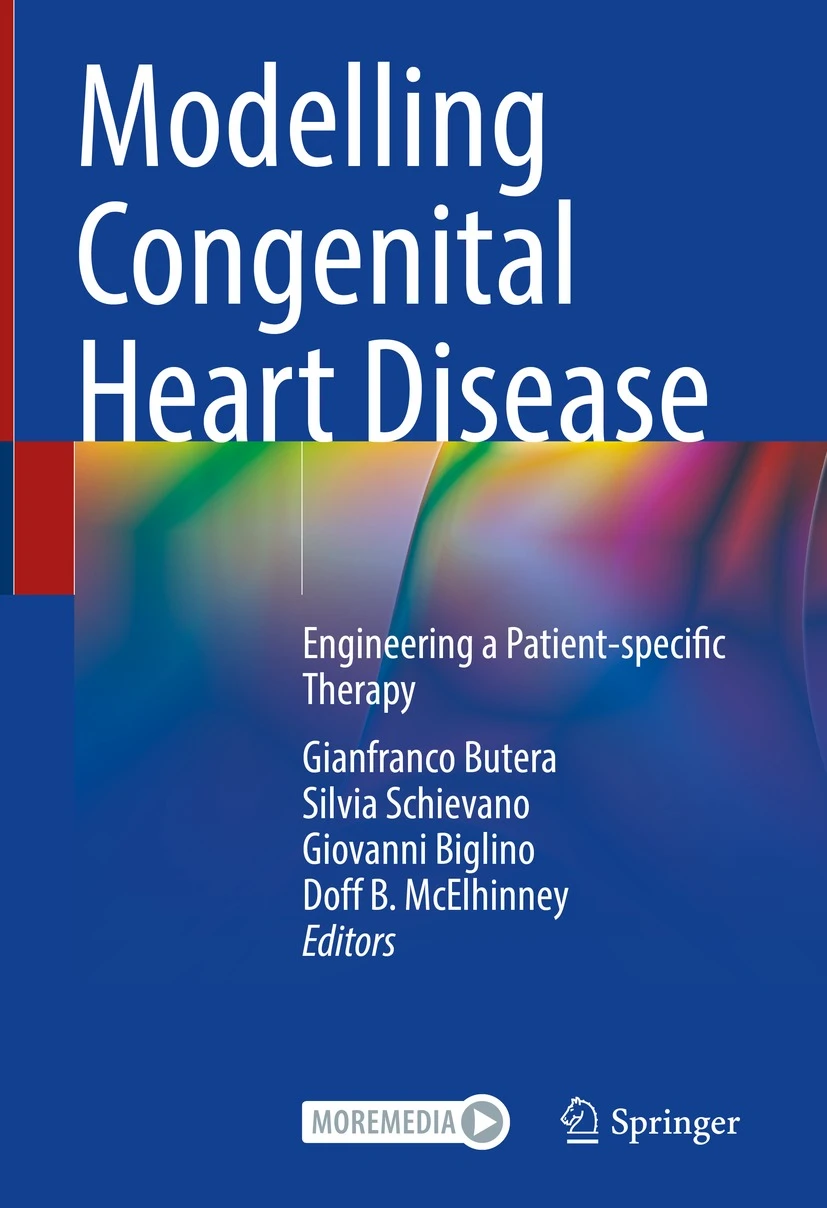
Modelling Congenital Heart Disease – Engineering a Patient -specific Therapy – Editors: Gianfranco Butera, Silvia Schievano,
$159.99
Book © 2022
Hardcover ISBN978-3-030-88891-6
Edition Number1
Number of PagesXI, 302
Number of Illustrations7 b/w illustrations, 130 illustrations in colour
Topics Internal Medicine, Surgery, Biotechnology, Biomedical Engineering and Bioengineering, Computational and Systems Biology
- Presents applications of engineering modelling to CHD treatment
- Provides a list of practical case studies
- Each chapter has been written by a clinician and an engineer
About this book
This book combines medicinal and engineering knowledge to present engineering modelling applications (mainly computational, but also experimental) in the context of facilitating a patient-centred approach to treating congenital heart disease (CHD).
After introducing the basic concepts of engineering tools, it discusses modelling and the applications of engineering techniques (e.g. computational fluid dynamics, fluid-structure interaction, structural simulations, virtual surgery, advanced image analysis, 3D printing) in specific congenital heart diseases. It also offers a number of clinical case studies describing the applications in real-life clinical practice.
The final section focuses on the importance of surgical training, counselling and patient communication.
Considering the unique anatomical arrangement pre/post repair in CHD, as well as the different surgical strategy and device options (e.g. stents) for interventions, a patient-specific approach is certainly warranted in this area of medicine, and engineering is helping improve our understanding of individual patients and their particular anatomy and physiology.
To reinforce the idea of a necessary dialogue between engineers and clinicians, this book has not only been edited by two cardiologists and two bioengineers, but each chapter has been written by a clinician and an engineer, incorporating both voices in the description of state-of-the-art models for different CHDs.
TABLE OF CONTENTS – 29 CHAPTERS
Front Matter
Pages i-xi
Basic Concepts
Front Matter
Pages 1-1
Overview of Computational Methods
Giovanni Maria Formato, Silvia Schievano, Giovanni Biglino
Pages 3-9
Congenital Heart Diseases: Basic Concepts from a Pediatric Cardiology Perspective
Mario Giordano, Gianfranco Butera
Pages 11-20
Diseases: Modelling and Applications
Front Matter
Pages 21-21
Septal Defects: Clinical Concepts, Engineering Applications, and Impact of an Integrated Medico-Engineering Approach: Occluder Devices
Mario Giordano, Giorgia Bosi, Gianfranco Butera
Pages 23-42
Aortic Coarctation: Clinical Concepts, Engineering Applications, and Impact of an Integrated Medico-Engineering Approach
Damien P. Kenny, John F. LaDisa Jr
Pages 43-60
Tetralogy of Fallot, the Right Ventricular Outflow Tract: Clinical Concepts, Engineering Applications and Impact of an Integrated Medico-Engineering Approach
Laxmi Kaliyappan, Nithin Balasubramanian, Silvia Schievano, Louise Coats
Pages 61-73
Tetralogy of Fallot Ventricle: Clinical Concepts, Engineering Applications, and Impact of an Integrated Medico-Engineering Approach
Henrik Brun, Kristin McLeod
Pages 75-87
Complete Transposition of Great Arteries Post-Arterial Switch Operation: An Integrated Approach of Imaging and Modelling to Assess Long-Term Outcomes
Claudio Capelli, Teodora Popa, Andrei-Mihai Iacob, Hopewell
Ntsinjana
Pages 89-100
Double Outlet Right Ventricle: Introductory Concepts and Applications
Justin T. Tretter, Claudio Capelli, Puneet Bhatla
Pages 101-109
Hypoplastic Left Heart Syndrome: Introductory Concepts
Lorenzo Galletti, Nicola Uricchio
Pages 111-117
Hypoplastic Left Heart Syndrome, Norwood and Variants: Clinical Concepts, Engineering Applications and Impact of an Integrated Medico-Engineering Approach
Adelaide de Vecchi
Pages 119-125
Univentricular Heart: Clinical Concepts and Impact of an Integrated Medico-Engineering Approach
Mario Giordano, Gianpiero Gaio, Maria Giovanna Russo, Gianfranco Butera
Pages 127-138
Fontan Surgery and Fluid Dynamics
Ethan Kung, Alison Marsden
Pages 139-148
Ventriculo-arterial Coupling in Fontan Patients
Giovanni Biglino, Maria Victoria Ordonez, Andrew M. Taylor
Pages 149-156
Modeling the Pulmonary Circulation in CHD: Clinical Concepts, Engineering Applications, and an Integrated Medico-Engineering Approach
Weiguang Yang, Jeffrey A. Feinstein, Irene E. Vignon-Clementel
Pages 157-167
Modelling Pulmonary Arterial Hypertension: Clinical Concepts, Engineering Applications and an Integrated Medico-engineering Approach
Ryo Torii, Vivek Muthurangu
Pages 169-187
How I Used a Model in Clinical Practice
Front Matter
Pages 189-189
Patient-Specific Numerical Modeling to Predict Coronary Artery Compression in Transcatheter Pulmonary Valve Implantation
Francesca R. Pluchinotta, Alessandro Caimi, Francesco Sturla, Mario Carminati
Pages 191-197
How I Used a Model in Clinical Practice
Transcatheter Correction of Sinus Venosus Atrial Septal Defect (SVASD) and Partial Anomalous Pulmonary Venous Drainage with a Covered Stent
Eric Rosenthal
Pages 199-203
Modelling the Coronary Anatomy in a Case of Suspected Kawasaki Disease with Giant Coronary Aneurysms
Andrew Shearn, Maria Victoria Ordonez, Massimo Caputo, Giovanni Biglino
Pages 205-207
Criss-Cross Heart: Is Biventricular Repair Ever Possible?
Francesca Raimondi
Pages 209-211
Use of 3D Printing for Congenital Heart Disease
Hannah Tredway, Nikhil Pasumarti, Matthew A. Crystal, Amee M. Shah, Kanwal M. Farooqi
Pages 213-220
Three-Dimensional Printed Model Guiding Transcutaneous Device Closure of a Complex Residual Ventricular Septal Defect: Comparing Apples to Apples
Justin T. Tretter, Puneet Bhatla
Pages 221-225
3D “Modeling” and “Printing” in Neonate with Complex Twisted Heart: New Frontier for Clinical Decision and Optimal Surgical Approach
Paolo Ciancarella, Paolo Ciliberti, Luca Borro, Aurelio Secinaro
Pages 227-230
Biventricular Repair of Complex Transposition of Great Arteries Guided by 3D Reconstruction Imaging
Yue-Hin Loke, David N. Schidlow
Pages 231-235
Training, Counselling and Miscellanea
Front Matter
Pages 237-237
Three-Dimensional Printing and Its Applications in Education and Teaching
Dimitri Patriki, Andreas A. Giannopoulos
Pages 239-244
Dassault Systèmes’ Living Heart Project
Steven Levine, Tom Battisti, Björn Butz, Karl D’Souza, Francisco Sahli Costabal, Mathias Peirlinck
Pages 245-259
Cardiovascular Simulation as a Decision Support Tool
Michael Broomé, Marcus Carlsson, Petter Frieberg, Nina Hakacova, Petru Liuba, Dirk W. Donker
Pages 261-271
Artificial Intelligence in Pediatric Cardiology
Addison Gearhart, Anthony Chang
Pages 273-284
Communication in Congenital Heart Disease: A Relevant Application for Engineering Models?
Giovanni Biglino, Maria Victoria Ordonez, Andrew Shearn, Sofie Layton, Jo Wray
Pages 285-291
Three-Dimensional Multimodality Fusion in Minimally Invasive Congenital Heart Interventions
Onno Wink, Alexander Haak, Sebastian Góreczny
Pages 293-302
Keywords
computational fluid dynamics
fluid-structure interaction
structural simulations
virtual surgery
3D printing
Tetralogy of Fallot
Hypoplastic left heart syndrome
Fontan surgery
Double outlet right ventricle
Bicuspid aortic valve
Mid-aortic syndrome
Septal defects
Ross procedure
Editors and Affiliations
Department of Pediatric Cardiology, Cardiac Surgery and Heart Lung Transplantation – ERN GUARD HEART, Bambin Gesù Hospital and Research Institute, Rome, Italy
Gianfranco Butera
UCL Institute of Cardiovascular Science and Great Ormond St Hospital for Children, London, UK
Silvia Schievano
University of Bristol, Bristol Medical School, Bristol, UK
Giovanni Biglino
Stanford University, Lucile Packard Children’s Hospital, Palo Alto, USA
Doff B. McElhinney
About the editors
Gianfranco Butera is Chief of the Department of Interventional Congenital Cardiology at Bambin Gesù Hospital IRCCS, Rome, Italy. He is Senior lecturer at King’s College University London. He has been Lead Consultant of the Department of Congenital Interventional Cardiology at St Thomas/Evelina Hospital in London. He has served as Chairman of the Interventional Cardiology Working Group of the AEPC and has been Visiting Professor at various universities including Harvard, Bordeaux, Cincinnati and Padova. His clinical and research interests are focused on interventional cardiology in children and adults with congenital heart disease. He has authored more than 230 papers in peer-reviewed journals and has edited books on interventional and fetal cardiology.
Silvia Schievano is Professor of Biomedical Engineering at University College London, UK. She graduated from Politecnico of Milan, Italy, and pursued her PhD degree in clinical cardiovascular engineering at Great Ormond Street Hospital for Children, UK. Her main research activities are in translational engineering for clinical practice, focusing on patient specific assessment of complex congenital heart disease cases, statistical shape modelling and population analyses, and computational simulations to support design of new transcatheter valve implantation devices.
Giovanni Biglino is a biomedical engineer and currently Senior Lecturer in Biostatistics at the Bristol Heart Institute (Bristol Medical School, UK). After a degree in Bioengineering at Imperial College London and a PhD in cardiovascular mechanics at the Brunel Institute for Bioengineering, he carried out research at Great Ormond Street Hospital and University College London, and completed the Global Clinical Scholars Research Training programme at Harvard Medical School, Boston, USA. His main research interests are cardiovascular modelling, translational research in congenital heart disease and medical statistics. He is a Future Leader in Innovation Enterprise and Research with the UK Academy of Medical Sciences.
Doff B. McElhinney, MD, is a pediatric and adult congenital interventional cardiologist who is a Professor of Cardiothoracic Surgery and Pediatrics (Cardiology) at Stanford University.
He is Director of the Clinical and Translational Research Program and Medical Director of the Pulmonary Artery Reconstruction Program at the Lucile Packard Children’s Hospital Stanford. After a residency in Pediatrics at The Children’s Hospital of Philadelphia, PA, US, he completed pediatric and interventional cardiology fellowships at Children’s Hospital in Boston, MA, US.
He served on the faculty at Children’s Hospital in Boston for 6 years, then assumed the role of Director of Interventional Cardiology for Structural and Congenital Heart Disease at New York University, where he served as a Professor of Pediatrics, Medicine, and Cardiothoracic Surgery. He has been at Stanford since 2014.
Productos relacionados
-

Braunwald’s Heart Disease, Single Volume, 12th Edition
Leer más -

Hypertension Secrets 2nd Edition – March 8, 2022
$208,000.00 Añadir al carrito -

Cardiología en el área de urgencias 3 edition Juan Carlos Pérez-Alva
$305,000.00 Añadir al carrito -
Zipes and Jalife’s Cardiac Electrophysiology: From Cell to Bedside, 8th Edition 2022
$1,359,000.00 Añadir al carrito

Valoraciones
No hay valoraciones aún.