
Descripción
- Edition: 2
- Latest edition
- Published: September 1, 2026
- No. of pages (Paperback): 900
- Imprint: Academic Press
- Language: English
- Paperback ISBN: 9780443450785
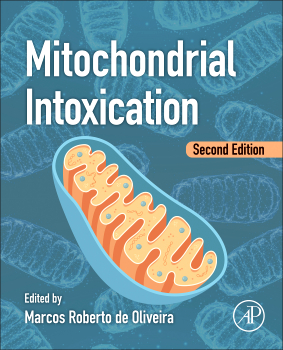
Mitochondrial Intoxication, Second Edition offers a comprehensive and fully updated exploration of the impact of toxic molecules on mitochondrial physiology, and the diseases that result from their dysfunction. Divided into three sections, the book opens with a detailed overview of mitochondrial physiology, molecular markers of mitochondrial intoxication and challenges of mitochondrial profiling during pre-clinical studies. It then focuses on endogenous toxicants and their impact on mitochondria, including new chapters on lipids, glucose and microbiota-derived toxicants. Amyloid-β peptide and its impact on mitochondrial dysfunction is also a new addition to this book, as well as inflammation-induced mitochondrial intoxication. The final section explores exogenous toxicants, such as pollutants, food additives, illicit and pharmaceutical drugs, pesticides and heavy metals. The effects of micro- and nanoplastics on mitochondrial function are newly covered. Furthermore, the latest computational tools in mitochondrial toxicity research are investigated. Incorporating the latest advances in the field, “Mitochondrial Intoxication, Second Edition” offers cutting-edge insights on mitochondrial toxicity, and serves as an invaluable resource for researchers and advanced students in cell biology, molecular biology, toxicology, biochemistry, pharmacology, and related fields.
Key features
- Covers molecular markers of mitochondrial intoxication
- Includes case studies that illustrate the health impacts of toxicity upon mitochondria
- Provides new insights on environmental contaminants like microbiota-derived molecules and micro- and nanoplastics and their impact on mitochondrial physiology
- Investigates endogenous molecules such as cholesterol, glucose, and beta-amyloid peptides affecting mitochondrial health
- Explores computational tools and their application to mitochondrial toxicity research
Readership
Table of contents
1. Mitochondrial physiology: An overview
2. Molecular markers of mitochondrial intoxication
3. Challenges in mitochondrial profiling during pre-clinical studies
Section 2: Endogenous toxicants
4. Ammonia
5. Amyloid-β peptide and mitochondrial dysfunction
6. Lipids-induced mitochondrial intoxication
7. Glucose-induced mitochondrial intoxication
8. The effects of methylglyoxal on the mitochondria
9. Inflammation-induced mitochondrial intoxication
10. Microbiota-derived toxicants targeting mitochondria
Section 3: Exogenous toxicants
11. Drug-induced mitochondrial impairment: Mechanisms and testing systems
12. Clinical consequences of drug-induced mitochondrial dysfunction
13. Mitochondrial dysfunction and underlying molecular mechanisms in acrylamide-induced toxicity
14. The effects of air pollution toxicants on the mitochondria
15. Mitochondrial toxicity of aflatoxin B1
16. The effects of the alcohol abuse against the mitochondria: functional consequences for liver, muscle, and the brain
17. The effect of aluminium on mitochondrial dysfunctions
18. Discovery of amiodarone mitochondrial toxicity in liver and beyond
19. The mitochondrial disruption as a contributing factor for the neurotoxicity of amphetamines
20. Mitochondrial intoxication by anthracyclines
21. Antidepressants, mood-stabilizing drugs, and mitochondrial function: for better or for worse
22. The effects of HIV and the antiretrovirals on the mitochondria
23. Mechanisms of bisphenol A toxicity in mitochondria
24. Chemotherapeutic drugs
25. Effects of food additives on the mitochondria integrity and
26. Mitochondria as a toxicological target for fungicides
27. The effects of mercury on the mitochondria
28. Mitochondrial intoxication induced by micro- and nanoplastics
29. Organohalides
30. The effects of organophosphate pesticides on the mitochondria
31. Mitochondrial oxygen toxicity
32. Polychlorinated biphenyls
33. The effects of polycyclic aromatic hydrocarbons on mitochondria
34. The effects of pyrethroids on the mitochondria
35. The effects of sodium nitrate on the mitochondria
36. Effects of Δ9-tetrahydrocannabinol on mitochondria
37. Mitochondrial zinc toxicity
About the editor
MO
Marcos Roberto de Oliveira
Marcos Roberto de Oliveira, PhD earned his bachelor’s degree in Biological Sciences at Federal University of Rio Grande do Sul (UFRGS) in 2005, followed by a master’s and a Ph.D. in Biochemistry from the same institution. He is currently a professor and coordinates research at UFRGS. His research focuses on the neuroprotection mediated by natural molecules and involves studies on mitochondrial physiology, redox biology, bioenergetics, and inflammation in both in vitro and in vivo experimental models.
Professor, Department of Biochemistry, Federal University of Rio Grande do Sul, Universidade Federal do Rio Grande do Sul (UFRGS), Instituto de Ciências Básicas da Saude (ICBS), Departamento de Bioquímica, Rua Ramiro Barcelos, Brazil

Valoraciones
No hay valoraciones aún.